Enjoying a healthy diet can help you improve your quality of life. However, what a healthy diet is for you may change as you get older.
As you age, your nutritional needs evolve. Your body composition changes, you may produce less saliva, and you’re more likely to underproduce stomach acid. Additionally, your lifestyle may be less active than it once was.
These changes often mean you need fewer calories but more essential nutrients. To meet these needs, it’s important to adjust your diet accordingly.
Let's hear from a dietitian
This is Dr Natalie Colson (Griffith University). Dr Colson is a molecular geneticist and Accredited Practising Dietitian. She has over 15 years of experience as an educator and researcher.
In this video, Dr Colson responds to common questions about how dietary needs can change over time. She covers:
Common nutritional challenges faced by older adults
Practical tips and solutions to these issues
Quick summary
To eat for good health as you age, Dr Colson recommends a nutrient-dense diet. To achieve this, she emphasises the importance of:
Fruits and vegetables (aim for 5 serves of vegetables and 2 serves of fruit every day, where a serve is about 75g)
Lean proteins
Wholegrains
Dairy products (or plant-based substitutes)
Healthy fats such as olive oil and fatty fish
She also recommends being cautious of saturated fats and highly processed, sugary foods, and excess salt.
Continue reading for more information on the key nutrients that become critical with ageing, and what foods you can find them in.
Did you find this article useful?
Your feedback helps LiveUp to curate information that matters to you.
You might also be interested in these resources
Good grips kitchen tools
OXO Good Grips offer a full range of kitchen tools with wide slip-proof coatings to help you keep hold of handy tools for cooking in the kitchen.
The range includes mixing bowls, measuring jugs, box grater, measuring spoons, potato masher, and...
Protein is important for maintaining muscle and bone health. Some healthy sources of protein include:
Lean meats and seafood
Low-fat dairy products
Legumes (beans, lentils, and peas)
Nuts and seeds
Whole grains like oats, quinoa, or brown rice
Calcium
Calcium is also important for bone health. You can find calcium in:
Low-fat dairy products
Fortified plant-based milks and breakfast cereals
Cruciferous vegetables (dark leafy greens) like broccoli and bok choy
Dr Colson notes that many older people begin to have trouble digesting milk. If this is the case for you, consider lactose-free milk as an alternative source of calcium.
Vitamin D
Vitamin D helps you absorb calcium efficiently. Your body produces vitamin D from sunlight, but it can also be found in foods, such as:
Egg yolks
Fortified foods, including fruit juices, cereals, and plant-based milks
Mushrooms
Fatty fish, such as salmon and mackerel
All fish contain some mercury, but it's generally safe and even recommended to eat 2-3 serves of fish a week. This includes any type of tuna or salmon, canned or fresh.
B12 and iron
B vitamins (especially B12) and iron are important for energy levels and cognitive function. Both are predominantly found in animal products. This includes fish, eggs, dairy, and meat.
However, while red meat is a significant source of these nutrients, it’s best consumed in moderation. The Cancer Council recommends no more than 455g cooked (700g raw) lean red meat per week. It’s also recommended to minimise your intake of processed and charred meats.
You can find B12 and iron in foods other than meat, too. For example, you can find:
Iron in plant foods like spinach
B12 in fortified foods, nutritional yeast, and nori (the seaweed used to wrap sushi rolls)
Alternatives to red meat
Had enough red meet this week and unsure what to use as substitute?
Here are some satisfying alternatives to a serving of red meat:
65–100g cooked chicken
80–120g cooked fish fillet (preferably oily, recommended at least twice a week)
Two small eggs
⅓ cup cooked legumes (lentils, chickpeas, beans) or nuts
For those who eat meat, it’s important to also eat plenty of plant-based foods like fruits, vegetables, legumes, and whole grains.
Omega-3 fatty acids and antioxidants
These are both linked to heart and brain health. Good sources include berries, walnuts, and wild-caught salmon.
It’s important not to avoid fats altogether, even if you have high cholesterol. Instead, it’s better to choose healthy fats such as Omega-3 over unhealthy fat sources like saturated fats.
According to the Cancer Council, eating foods rich in omega-3 is linked to:
Reduced risk of heart disease
Relieving the symptoms of inflammatory conditions such as rheumatoid arthritis
Magnesium and zinc
Both magnesium and zinc are important for immune function and healing, and have been linked to aspects of mental wellbeing.
You can find both these nutrients in:
Whole grains
Nuts
Seeds
Legumes
Best ways to get your nutrients
Eat a variety of wholefoods
Looking for the best way to get all your nutrients without excess calories from unhealthy additives? The simplest answer is to eat a variety of wholefoods.
Wholefoods, such as fruit and veg, are minimally processed. They retain their natural nutrients. So, they’re more likely to provide what you need without hurting your heart.
Here are some tips for putting this into practice at mealtimes:
How to make a balanced, heart-healthy plate
Fill half your plate with a mix of fruits and vegetables.
Fill one quarter with carbohydrates from whole grains or starchy vegetables.
Fill the remaining quarter with protein sources like lean meats or legumes.
Include healthy fats, such as olive oil and avocado, and herbs and spices to enhance flavour instead of extra salt.
Aim for 5 veg and 2 fruit
A big part of this approach is prioritising fruits and vegetables. Diets higher in fruit and veg are linked with greater mental wellbeing.
The recommended goal is to eat 5 servings of vegetables and 2 of fruit every day.
To help you meet this goal, Dr Colson suggests cooking your vegetables into different meals you already enjoy. For example, try cooking extra carrots into your bolognese sauce.
Snack smart
You can choose nutrient-dense snacks rather than calorie-dense ones. Nuts and seeds are goods snacks that combine protein with healthy fats.
If you’re a lover of desserts, you can also try swap out processed sweets for healthier ones. This can help you increase the nutrition and decrease the sugar and saturated fats in your treats. For example, try fruits with yoghurt or custard instead of ice cream. You can include oat-based biscuits or almond flakes for crunchiness.
Meal planning
A weekly meal plan could help you be sure to include key nutrients in your diet. When designing your plan, check what’s already in your pantry. Use this as a base for meals you can create throughout the week. Then create a list of ingredients to buy to complete those dishes and provide any missing nutrients.
For example, you can buy milk or fortified alternatives to fulfill your calcium needs. Add this to smoothies, soups, or cereals. Also consider easy-to-prepare protein sources, such as scrambled eggs, grilled fish, or bean salads.
Consult your doctor or dietitian for specific advice about your meal plan.
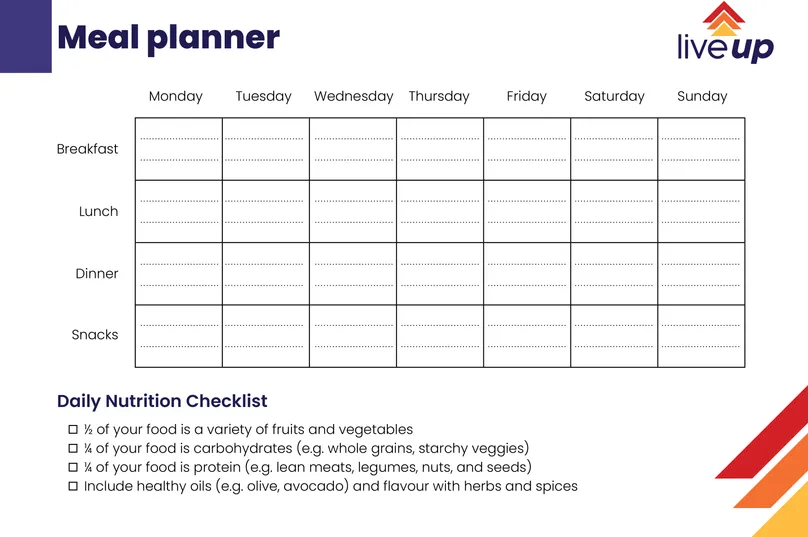
Download LiveUp's weekly meal planner
To help you plan your meals, you can download and print this weekly meal planner, complete with a basic nutrition checklist:
It can be harder for older people to absorb nutrients from food. To address this, talk with your doctor or dietician about the possibility of supplements. Always check with a health professional before taking new supplements or medications.
You may need to consider the impact of any medications you take on how you absorb nutrients. Health conditions such as diabetes and high blood pressure can also affect your dietary needs. Be sure to ask your doctor if you have any health concerns.
Weight management
Whether you want to lose or gain weight, it’s best to focus on nutrient-heavy foods.
Needing fewer calories but more nutrients can mean it’s easy to gain weight unintentionally. This can stress your heart, joints, and spine. Nutrient-dense meals can help you meet your nutritional needs without overloading on calories.
At the same time, a decrease in appetite is common in older people. This can lead to unintentional weight loss or malnutrition. In this case, nutrient-packed snacks throughout the day can help you meet your nutritional and caloric needs.
Constipation and digestive health
With slower digestion, fibre is important to prevent constipation and support gut health.
Here’s how you can increase your fibre intake:
Eat more oats, seeds, nuts, legumes, and vegetables.
Choose whole grains over refined options. For example, consider brown rice, wholemeal pasta, or wholegrain bread over white.
Are you planning to increase your fibre intake? Do this gradually, to avoid discomfort.
Regular exercise and staying hydrated also help with digestion and overall health.
Oral health
Maintaining good oral health helps you enjoy a diverse diet. Older adults may face increased dry mouth or tooth decay due to producing less saliva.
You can combat dry mouth by sipping water regularly. It also helps to limit sugary drinks and brush your teeth twice daily.
If you have difficulty chewing or swallowing, you can find protein in soft foods. For example, yogurt, soups, smoothies, scrambled eggs, or tender meats. You can also enhance moisture and flavour with olive oil or gravy. Just stay cautious of added sugars and salt in store-bought dressings and sauces.
Take charge of your health today
Navigating nutrition as you age may seem daunting. But with the right knowledge and strategies, it can be manageable and rewarding.
Here are a few ways to start taking charge of your health:
Be sure to eat a variety of wholefoods rich in essential nutrients.
Explore the LiveUp website for more resources and tips on eating well and other healthy ageing choices.
If you have any questions about healthy ageing, get in touch with our helpful team on 1800 951 971 or take the quick quiz.
References
LiveUp. (2024). Interview with Dr. Natalie Colson.
Barbagallo, M., Veronese, N., & Dominguez, L. J. (2021). Magnesium in Aging, Health and Diseases. Nutrients, 13(2), 463. https://doi.org/10.3390/nu13020463
Głąbska, D., Guzek, D., Groele, B., & Gutkowska, K. (2020). Fruit and vegetable intake and mental health in adults: A systematic review. Nutrients, 12(1), 115. https://doi.org/10.3390/nu12010115
Kiouri, D. P., Tsoupra, E., Peana, M., Perlepes, S. P., Stefanidou, M. E., & Chasapis, C. T. (2023). Multifunctional role of zinc in human health: an update. EXCLI journal, 22, 809–827. https://doi.org/10.17179/excli2023-6335
Kolarš, B., Mijatović Jovin, V., Živanović, N., Minaković, I., Gvozdenović, N., Dickov Kokeza, I., & Lesjak, M. (2025). Iron Deficiency and Iron Deficiency Anemia: A Comprehensive Overview of Established and Emerging Concepts. Pharmaceuticals, 18(8), 1104. https://doi.org/10.3390/ph18081104
Pilz, S., Zittermann, A., Trummer, C., Theiler-Schwetz, V., Lerchbaum, E., Keppel, M. H., Grübler, M. R., März, W., & Pandis, M. (2019). Vitamin D testing and treatment: a narrative review of current evidence. Endocrine connections, 8(2), R27–R43. https://doi.org/10.1530/EC-18-0432
Volkert, D., Beck, A. M., Cederholm, T., Cruz-Jentoft, A., Goisser, S., Hooper, L., Kiesswetter, E., Maggio, M., Raynaud-Simon, A., Sieber, C. C., Sobotka, L., van Asselt, D., Wirth, R., & Bischoff, S. C. (2019). ESPEN guideline on clinical nutrition and hydration in geriatrics. Clinical Nutrition, 38(1), 10–47. https://doi.org/10.1016/j.clnu.2018.05.024
How to use this information
LiveUp provides free information to help you make informed decisions about your health. This information is for general and educational purposes only, is not intended to provide a comprehensive guide, and does not replace medical advice. Everyone is different, so some of these tips may work better for you than others. You should use your own judgment and seek medical advice when applying this information to yourself, to determine if it is suitable in your circumstances. Your use of, or reliance on, this information is solely at your own risk. Independent Living Assessment Incorporated is not responsible or liable for any injury, loss, or damage caused as a result of your use of, or reliance on, this information.
Download and print this article:
You can print out the PDF and stick it to your fridge or file away the tips to revisit at a later time.
Read more Nutrition articles
Did you enjoy this article? You may also like reading similar healthy ageing articles.