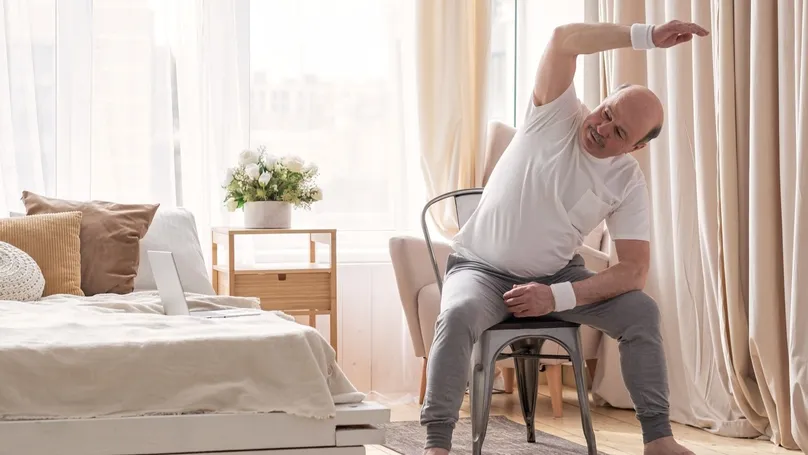
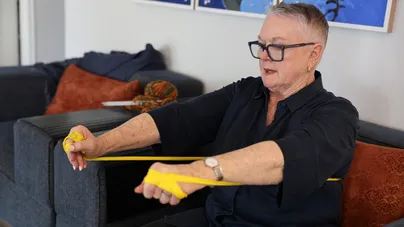
Chair yoga has benefits for older people as a low-impact, low-cost, but high-reward exercise.
What is chair yoga?
You may have heard that yoga is a wonderful way to maintain your physical health and calmness of mind – and it’s true. Yoga can help improve strength, balance, mobility, and mindfulness.
But is it only for those who are young and flexible, and who can afford weekly $40 classes? Absolutely not!
There's a way to try out yoga that's low cost, low impact, and high reward.
Chair yoga is suitable for:
Older people
People with limited mobility
People with chronic conditions such as knee osteoarthritis
All you need is a stable chair with no arms, and you can do some gentle yoga in your own home for free.
Why try chair yoga?
Physical health benefits
Chair yoga can help you maintain an active lifestyle as you age. It can improve your:
Strength and functional fitness
Mobility and balance-related outcomes
These improvements support your independence and confidence in everyday activities.
Reduce your risk of falls
Research shows that chair-based exercise programs can help older adults move safely.
A 2023 study combined seated yoga with fall-prevention lessons. The study found significant improvements in mobility, based on functional tests including:
Timed Up and Go (TUG) test
Chair stand test
These types of improvements can help reduce risk of falls by supporting safer movement.
Mindfulness and emotional benefits
Yoga (including chair yoga) is considered a mind-body exercise. This means it blends gentle physical movements with mindful practices such as breathing and focused awareness.
A chair yoga class could introduce you to simple breathing and meditation practices. It may help you feel calmer and more relaxed.
The physical benefits of chair yoga can also have a positive emotional impact. Older adults taking part in chair-based yoga have reported experiencing:
More confidence in their movement
Did you find this article useful?
Your feedback helps LiveUp to curate information that matters to you.
You might also be interested in these resources
Why try Tai Chi? Gentle exercise for healthy ageing
Improve balance, reduce stress, and support your wellbeing with Tai Chi. Discover how this gentle, low-impact practice can help you stay active as you age. Follow along with a video demonstration.
Discover the benefits of water aerobics for older adults. Learn how this low-impact exercise improves strength, flexibility, and cardiovascular health.
Chair yoga classes also provide an opportunity to connect with others in your community. Staying socially connected is an essential part of healthy ageing.
The benefits of gentle exercise
Gentle movement is important for managing many long-term health conditions. Chair yoga is a safe, low-impact option.
Gentle exercise can be especially helpful for managing arthritis. In fact, another study from 2023 found that chair yoga can make daily tasks easier for older adults with knee osteoarthritis.
Convinced that chair yoga is worth a shot, but still wondering how to get started? Here are some handy tips.
First, put on comfortable clothes.
Next, get your stable, armless chair. Be sure to place it on a flat surface.
Choose somewhere you have room to extend your arms around you. It might also be nice to find a place with natural light and a pleasant view.
Finding guidance
To get things going in a self-directed way, you can use an exercise sheet with a few different poses to try.
If you want a more guided session, you can find helpful videos online. You can also download mobile apps with daily yoga videos, though these often come with a monthly fee.
Another great option is to find a local group in your community to practice with. Chair yoga classes are often quite affordable.
Staying safe
Before you begin, remember to listen to your body. Stop and seek advice from a medical professional if you feel new or increasing pain, or if you feel dizzy, clammy, or short of breath. Some exercises may not be for you. Consult a medical professional if you are unsure.
Progress at your own pace
Once you've mastered the seated poses, you might want to advance your difficulty level. You may even want to try standing poses that include the chair as support. Chair yoga can allow for a self-determined progression. You can engage this practice whenever you like and step it up whenever you're ready.
As for how often you should practice, even a little bit of yoga helps. However, keeping up with a regular fitness routine could be most beneficial for you. Get advice from your healthcare professional when planning a new exercise regimen.
Explore more with LiveUp
If you would like to find local exercise classes, social activities, and helpful tips, take the quick LiveUp quiz or call our helpful team for free today on 1800 951 971.
Kemeny, B., Bright, H., Digman, L., McCormack, K., Page, R., & Setto, M. (2023). Is education enough? Seated yoga and falls prevention for older adults. Innovation in Aging, 7(Supplement_1), 1169–1170. https://doi.org/10.1093/geroni/igad104.3750
Ward, L., Tew, G. A., Wiley, L., Rose, F., Maturana Palacios, C. S., Bissell, L., Howsam, J., & Rapley, T. (2025). Perceptions and experiences of chair-based yoga by older adults with multimorbidity: A qualitative process evaluation of the Gentle Years Yoga randomized controlled trial. BMC Geriatrics, 25(152). https://link.springer.com/article/10.1186/s12877-025-05782-3
Yao, C.-T., Lee, B.-O., Hong, H., & Su, Y.-C. (2023). Effect of Chair Yoga Therapy on Functional Fitness and Daily Life Activities among Older Female Adults with Knee Osteoarthritis in Taiwan: A Quasi-Experimental Study. Healthcare, 11(7), 1024. https://doi.org/10.3390/healthcare11071024
How to use this information
LiveUp provides free information to help you make informed decisions about your health. This information is for general and educational purposes only, is not intended to provide a comprehensive guide, and does not replace medical advice. Everyone is different, so some of these tips may work better for you than others. You should use your own judgment and seek medical advice when applying this information to yourself, to determine if it is suitable in your circumstances. Your use of, or reliance on, this information is solely at your own risk. Independent Living Assessment Incorporated is not responsible or liable for any injury, loss, or damage caused as a result of your use of, or reliance on, this information.
Download and print this article:
You can print out the PDF and stick it to your fridge or file away the tips to revisit at a later time.
Read more Fitness articles
Did you enjoy this article? You may also like reading similar healthy ageing articles.